bloc · 2023– · Mali · Burkina Faso · Niger
01
Introduction
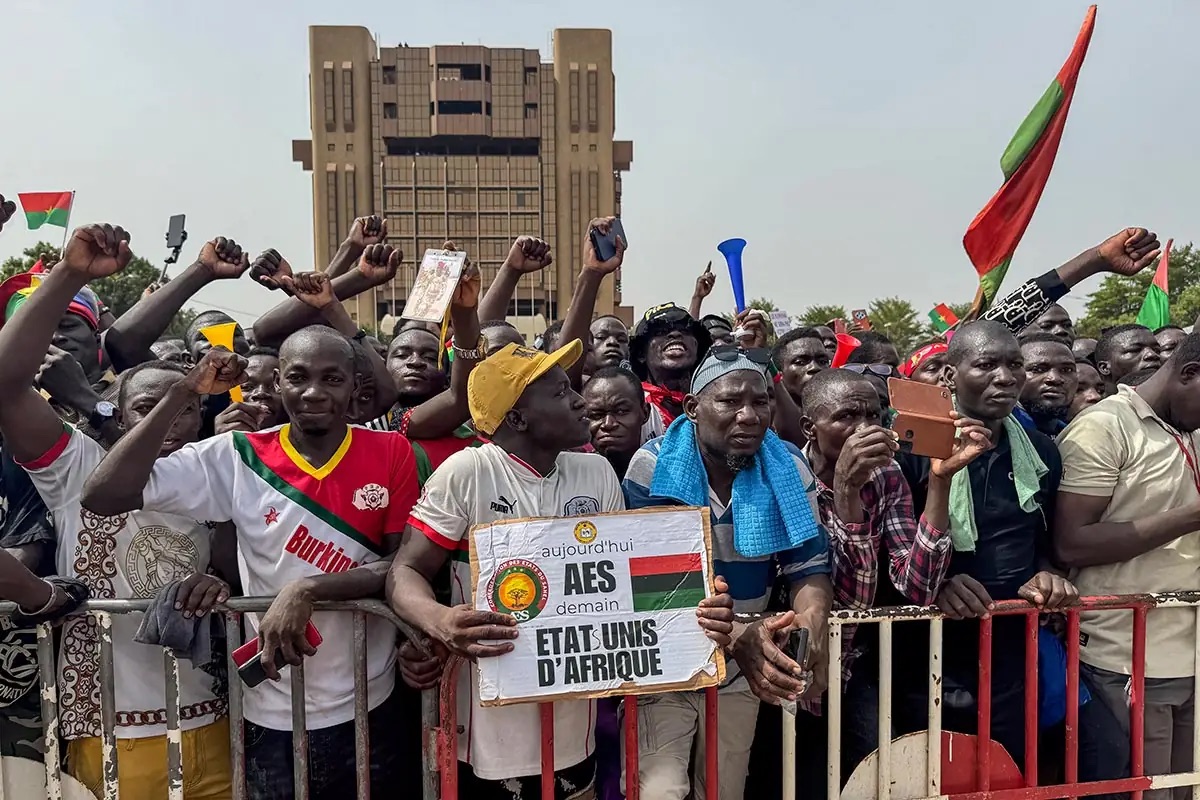
The Alliance of Sahel States (AES) is located in the Sahel region of West Africa, spanning a belt that separates the Sahara Desert to the north from the tropical regions to the south. Specifically, the AES is composed of three sovereign nations: Mali, Burkina Faso, and Niger.
02 · 1884–1962
The Scramble for Africa
The Second Industrial Revolution marked the transition of capitalism into its highest stage, where European oligarchies violently partitioned Africa to extract surplus capital and seize raw materials like rubber, copper, petroleum, and cotton to feed their domestic production lines.
The Berlin Conference of 1884–85 is where European powers drew borders with no regard for existing political and cultural boundaries.
France claimed the vast territory of French West Africa, and the colonies that would become Mali, Burkina Faso, and Niger were assembled as administrative units designed to serve extraction: forced labor, head taxes, and the cultivation of cash crops for export.
The colonial economy was built to supply the metropole, not to develop local production.
03 · 1958–1963
Flag Independence and The First Wave of Unity
Flag Independence
In September 1958, de Gaulle put a choice to France’s African territories: join a French Community with self-government at home but Paris in charge of currency, defence and foreign policy, or take independence at once and lose French aid overnight. Every territory voted yes except one:
95%
of Guinea's voters said no to de Gaulle's French Community. France pulled its administrators out within weeks, and the rest of French Africa saw the price of refusing.1
Within two years the Community had emptied out anyway. In 1960 Mali, Upper Volta and Niger became independent alongside eleven other French colonies, with flags, anthems and seats at the United Nations. But most signed cooperation agreements with Paris covering defence, money and priority access to strategic raw materials, and all kept the CFA franc. The symbols changed hands; the currency, the mines and the military stayed tied to France.
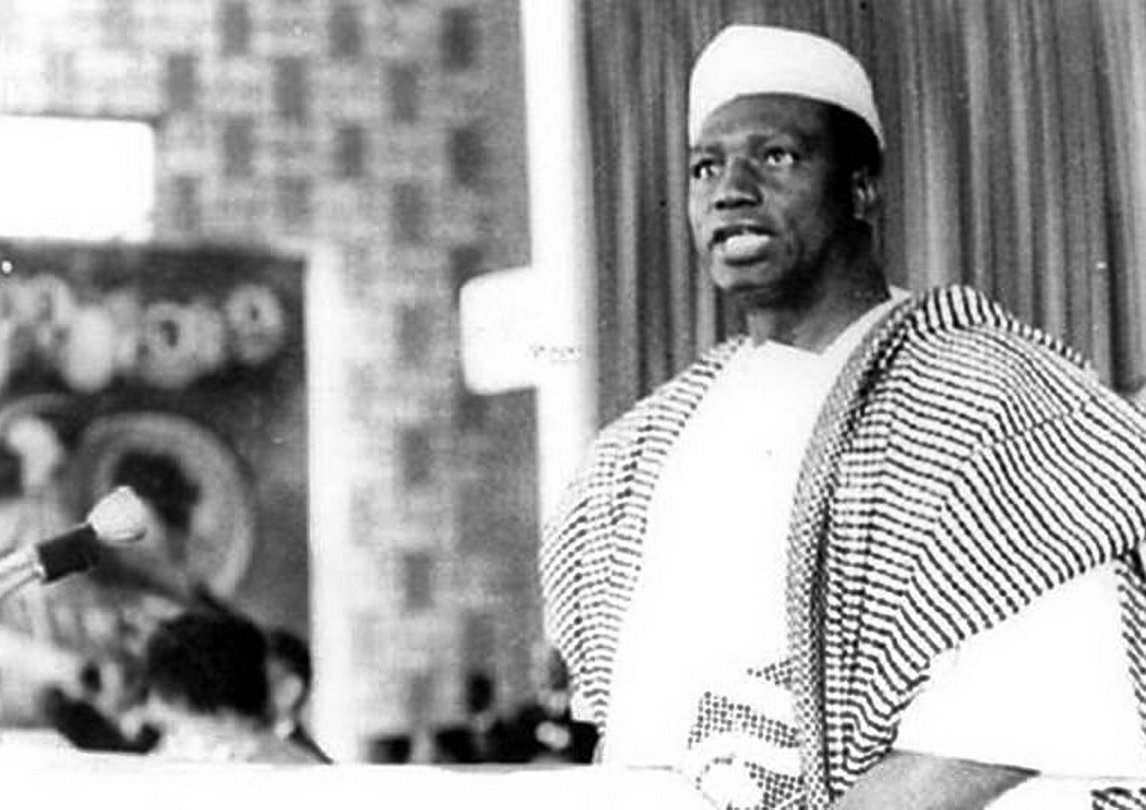
Modibo Keïta and the Mali Federation (1959–1960)
The first concrete experiment united Senegal and the Sudanese Republic (modern Mali) under Léopold Sédar Senghor and Modibo Keïta. It was conceived as a larger West African federation, but Upper Volta (Burkina Faso) and Dahomey (Benin) withdrew early on. The union collapsed in August 1960 over disagreements between Senghor and Keïta on the balance of power, leaving Mali as a separate, landlocked state with Keïta as its president.
He set out to make that independence more than a flag. He had French troops leave their bases in Mali in 1961, and in 1962 he took Mali out of the CFA franc and issued a Malian franc of its own. Abroad he was a fierce advocate for the Non-Aligned Movement and backed liberation struggles across Africa, including Algeria’s FLN; for all his non-alignment, his anti-colonialism drew him into close ties with the Soviet Union, China and Cuba. In 1963 he was a key figure in the creation of the Organization of African Unity (OAU).
The Ghana–Guinea–Mali Union (1961–1963)
After the Mali Federation failed, Keïta pivoted to a radical Pan-African alliance with Sékou Touré’s Guinea and Kwame Nkrumah’s Ghana. This “Union of African States” was a loose political and economic pact intended as a nucleus for a United States of Africa. It failed for several reasons: the countries were geographically separated (Ghana and Mali did not share a border), they had different colonial linguistic and administrative systems, and they disagreed on key foreign policy issues like the Congo Crisis. The union dissolved quietly in 1963, a victim of competing nationalisms and the difficulty of translating shared ideology into functional governance.
04 · 1968–2021
Neocolonialism and the Security-First Decades
Independence in Name Only
The flags changed in 1960; the arrangement underneath them did not, and the leader who tried to change it did not last. In 1968 Keïta was overthrown in a French-backed coup, and the military government that replaced him steered Mali back toward the franc zone, which it rejoined in full in 1984.
The CFA franc shows how that arrangement worked. Its exchange rate was fixed and guaranteed by the French Treasury, French officials sat on the board of the regional central bank, and in return the bank had to deposit a share of its reserves in Paris:
50%
of their foreign-exchange reserves the West African CFA states still had to keep at the French Treasury until 2020.2
When the debt crises of the 1980s arrived, the IMF and the World Bank made their loans conditional on structural adjustment: cuts to public spending, the sale of state companies, the end of support for farmers. Then on 12 January 1994, under pressure from Paris and the IMF, the CFA franc was devalued by half overnight, doubling the price of everything the franc zone imported. Neither decision was put to the people who paid for it.
Niger’s uranium is the starkest case. For half a century, French state-owned companies mined it at Arlit and Akokan to fuel French reactors, while Niger remained one of the poorest countries on earth:
only13%
of the total export value generated by the two dominant French uranium companies reached Niger in 2010.3
Thomas Sankara (1983–87)
In August 1983 a young army captain, Thomas Sankara, came to power in Upper Volta at the head of a popular revolution, and a year later renamed the country Burkina Faso, “the land of upright people.” In four years his government set out to prove that a poor Sahelian state could stand on its own: anti-imperialist abroad, self-reliant at home, and bent on transforming the society it governed.
Women's Liberation
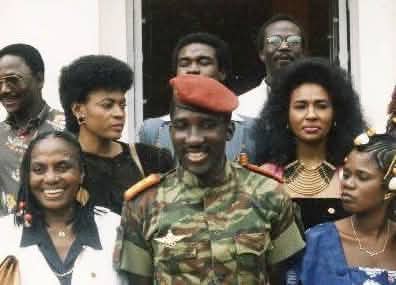
Sankara's government banned female genital cutting, forced marriage, and polygamy, and appointed women to the cabinet and the armed forces, treating women's emancipation as a condition of the revolution rather than a reward for it.
Vaccinating a Nation's Children
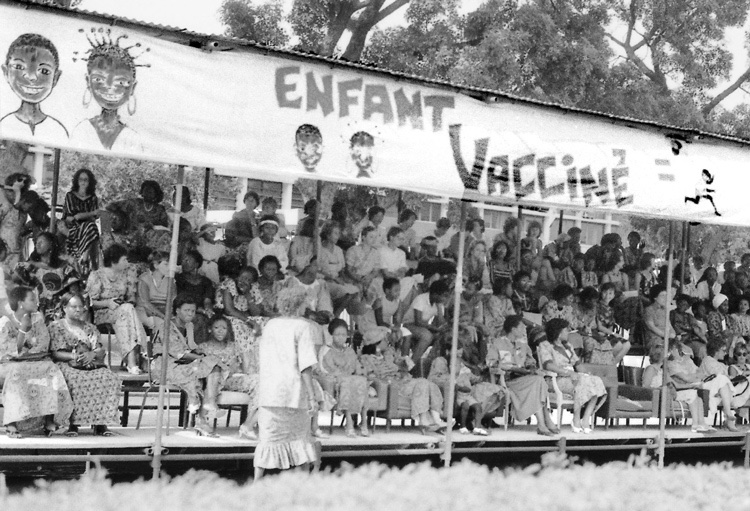
His administration vaccinated roughly 2 to 2.5 million children against meningitis, yellow fever, and measles in a matter of weeks.
Education and Literacy
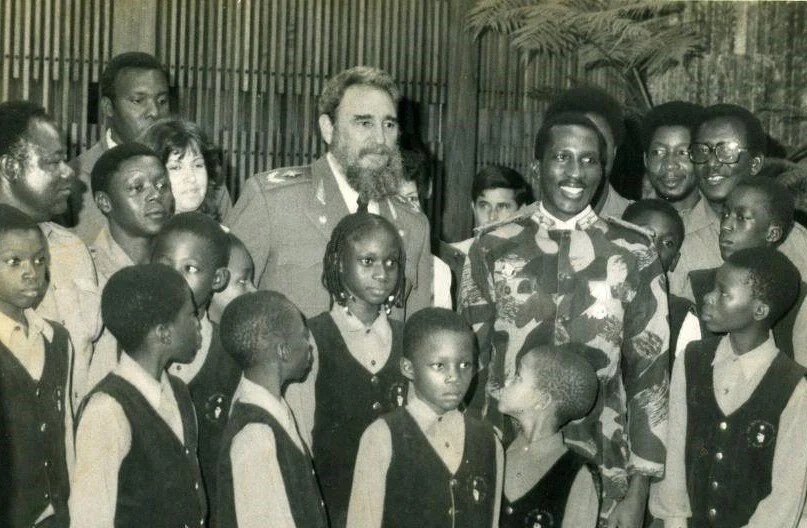
He launched a massive nationwide literacy campaign that raised the literacy rate from about 13% to 73%.
Rejecting the Debt
He rejected loans and structural adjustment programs from the International Monetary Fund and the World Bank, arguing that foreign debt was a tool of neo-colonialism.
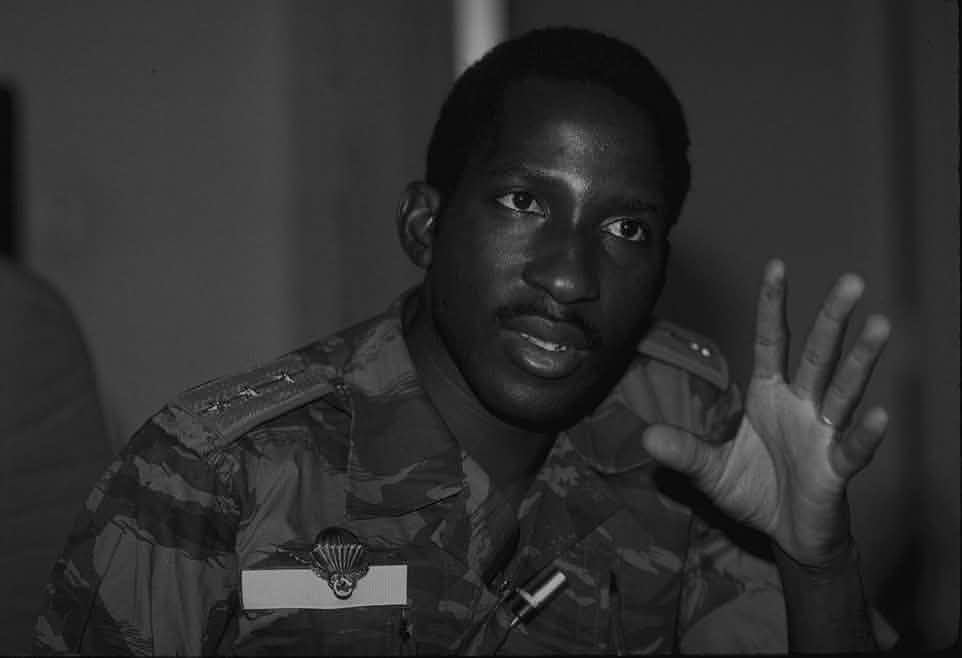
On 15 October 1987, Sankara was assassinated alongside twelve of his comrades in a coup led by Blaise Compaoré, his closest companion in the revolution. Compaoré ruled Burkina Faso for the next twenty-seven years, undoing much of what the revolution had built and bringing the country back under the IMF and World Bank, until a popular uprising drove him out in 2014. In 2022 a military tribunal in Ouagadougou convicted him in absentia of complicity in Sankara’s murder.
Libya, 2011
NATO intervention, arms proliferation, the destruction of a Pan-Africanist state project, the material catalyst for the jihadist insurgency. Libya stuff goes here (maybe a visual?)
The G5 Sahel
The history of the G5 Sahel taught them that security partnerships reliant on foreign funding are compromised and can be abandoned. The AES is the product of these lessons: it is a security-first, sovereignty-focused confederation built by military leaders who share a common enemy (jihadist insurgencies) and a common grievance (against France and ECOWAS). Its success has been showcased in that it has translated military cooperation into economic viability (can add information on its current successes)
ECOWAS
From anti-colonial rhetoric to a liberal regional order; the CEAO subversion; sanctions after the military interventions. Need to expand on how ecowas is a tool of neo-colonialism.
05 · 2017–2022
The Popular Military Interventions
2017–2022 mobilizations: CFA protests, the Bounti strike, French convoy incidents, the 2019 Mali protests.
Women in the mass movements and popular organizations; grassroots leaders and their support.
06 · 2022–2025
The Formation of the AES
Chronology: 2022 expulsions of French forces, 2023 Charter of Liptako-Gourma, 2024 confederation, 2025 ECOWAS exit.
Structure: collective defense, self-funding, repurposed Liptako-Gourma Authority, plans for a common currency and single passport.
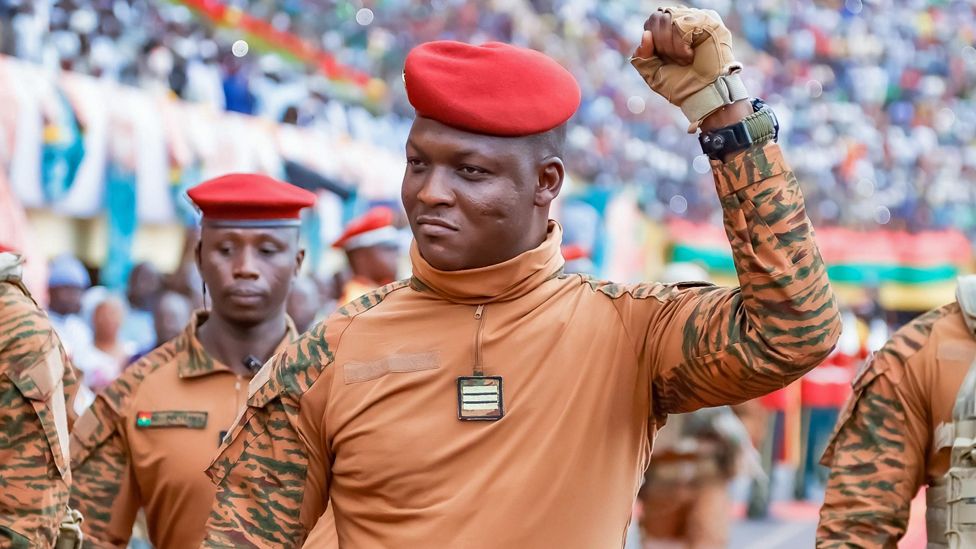
Profiles: Goïta, Traoré, Tchiani.
07 · 2025–
The Future of the Sahel
Economic sovereignty in practice… write more about plans to get a new currency, etc.
Monetary and financial integration: the common currency plans and the political significance of delinking from the CFA franc; self-funding as the answer to the G5’s dependence.
Security cooperation: joint exercises, coordinated counterterrorism, the collective-defense charter as a functioning framework.
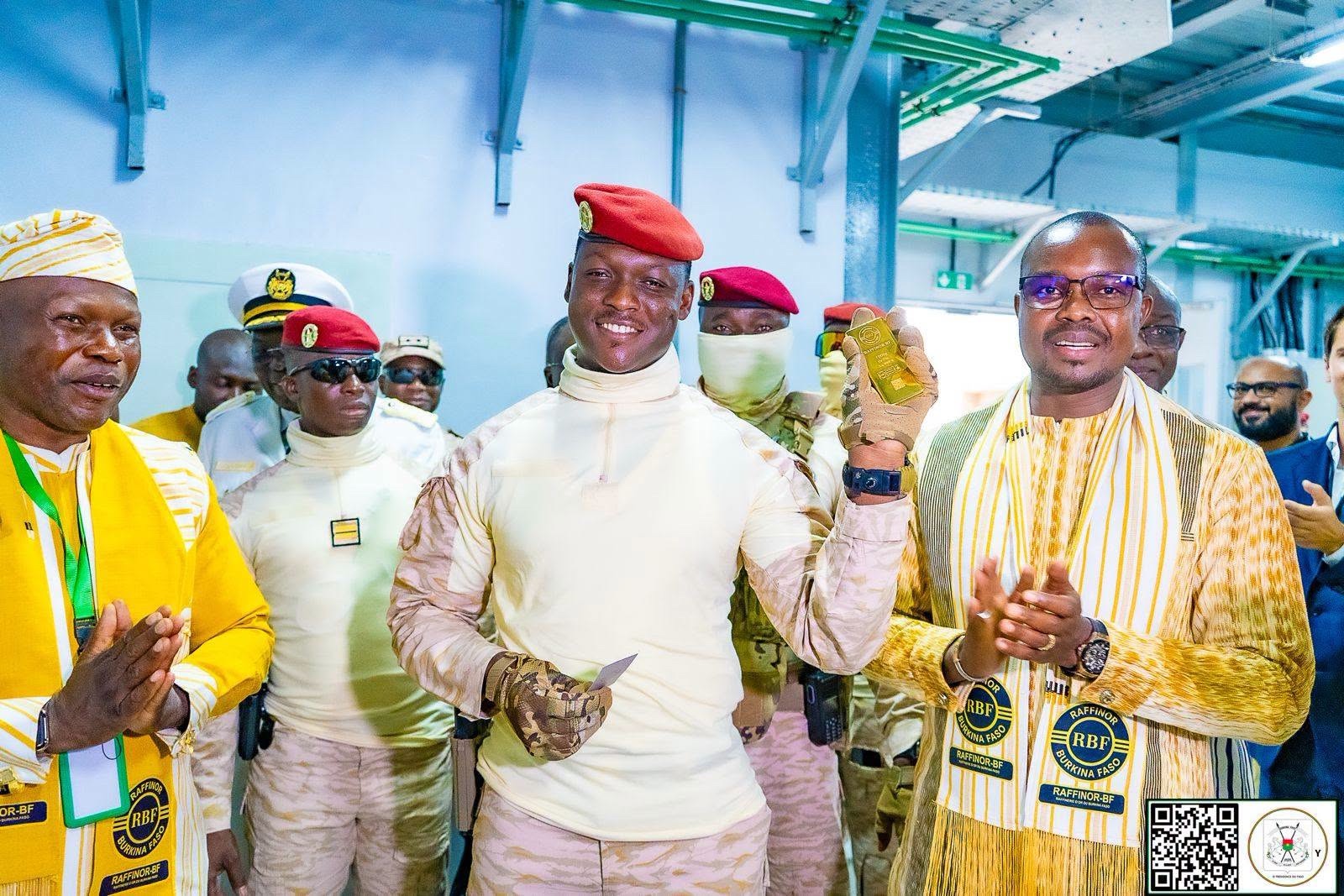
Burkina Faso's Gold, Refined at Home
Moving beyond raw resource extraction by nationalizing gold mines and constructing Burkina Faso's first local gold refinery.
Reclaiming Niger's Uranium
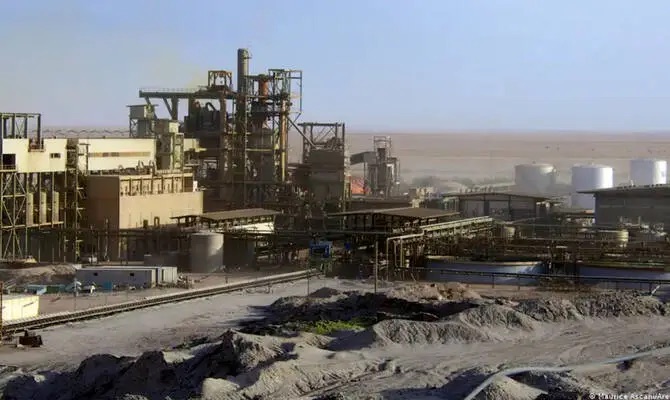
Niger seized and nationalized the Aïr Mining Company (SOMAÏR) in the Arlit region, ending a 50-plus year dominance by France's nuclear enterprise.
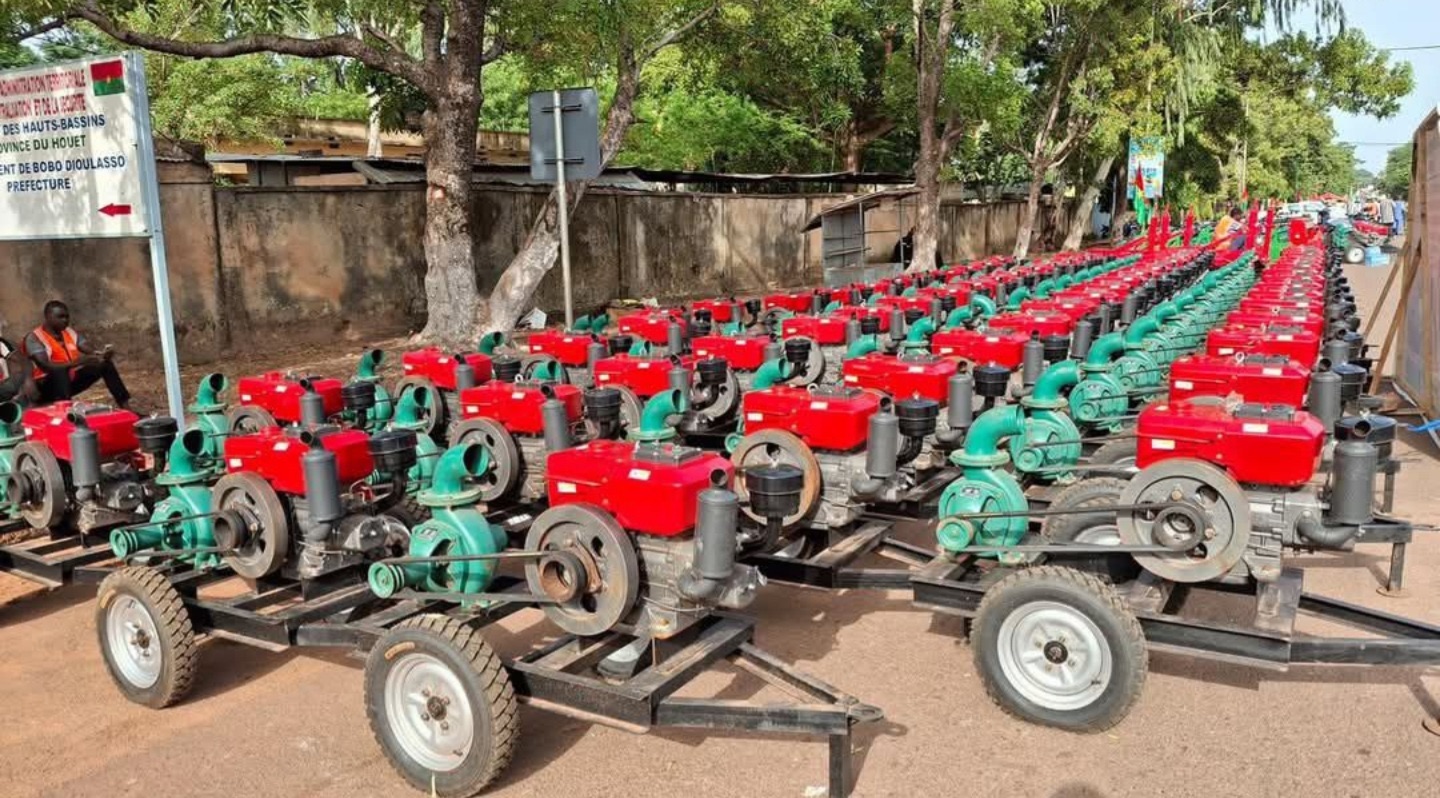
Food Self-Sufficiency
Ibrahim Traoré handed over more than 104 billion CFA francs (about $172 million) of agricultural equipment and inputs to farmers, funded by internally generated revenue, as part of the drive for food self-sufficiency and decent rural jobs.
Leaving ECOWAS Together
Mali, Burkina Faso, and Niger all withdrew from ECOWAS, the western-backed regional bloc that had threatened them with sanctions and intervention.
Notes
- 1
In the referendum of 28 September 1958, Guinea voted 1,136,324 to 56,959 against joining the French Community, about 95 percent, and was the only territory to refuse. It declared independence on 2 October 1958; France withdrew its administrators, teachers and doctors, along with their equipment and aid.
- 2
Under the operations-account agreement, the BCEAO had to deposit a share of its foreign-exchange reserves at the French Treasury: all of them until 1973, 65 percent until 2005, and 50 percent after. The requirement was ended by the agreement of 21 December 2019, ratified by France in 2020, and the account was closed in 2021. Sources: Banque de France; BCEAO.
- 3
Oxfam France and ROTAB, Niger: à qui profite l'uranium? L'enjeu de la renégociation des contrats miniers d'AREVA (November 2013). Of roughly €3.5 billion in uranium exported in 2010 by Somaïr and Cominak, Areva's two Nigerien subsidiaries, Niger received €459 million.